


A few months ago, I was in the middle of a workday when I realized I wasn’t actually working anymore.
I was staring at my screen, reading the same sentence over and over, feeling like my brain had left the room. I wasn‘t tired enough to stop. I wasn’t focused enough to continue. I was just… stuck.
I used to think the answer to that feeling was more coffee. Or more discipline. Or just pushing through until it passed.
But pushing through never actually worked. It just made the stuck feeling last longer.
That‘s when I started looking for something else — not a solution to the problem, but a way to respond to it in the moment. A small action I could take that would signal to my brain: we’re pausing, not quitting.
What a coping ritual actually is
A coping ritual is not about fixing anything. It‘s not a productivity hack. It’s not about “optimizing your mindset.”
It‘s a small, deliberate action you take when you feel overwhelmed, scattered, or disconnected. It doesn’t solve the problem. It just helps you reset so you can return to it with a little more presence.
Think of it like a micro-pause — not a break from what you‘re doing, but a shift in how you’re doing it.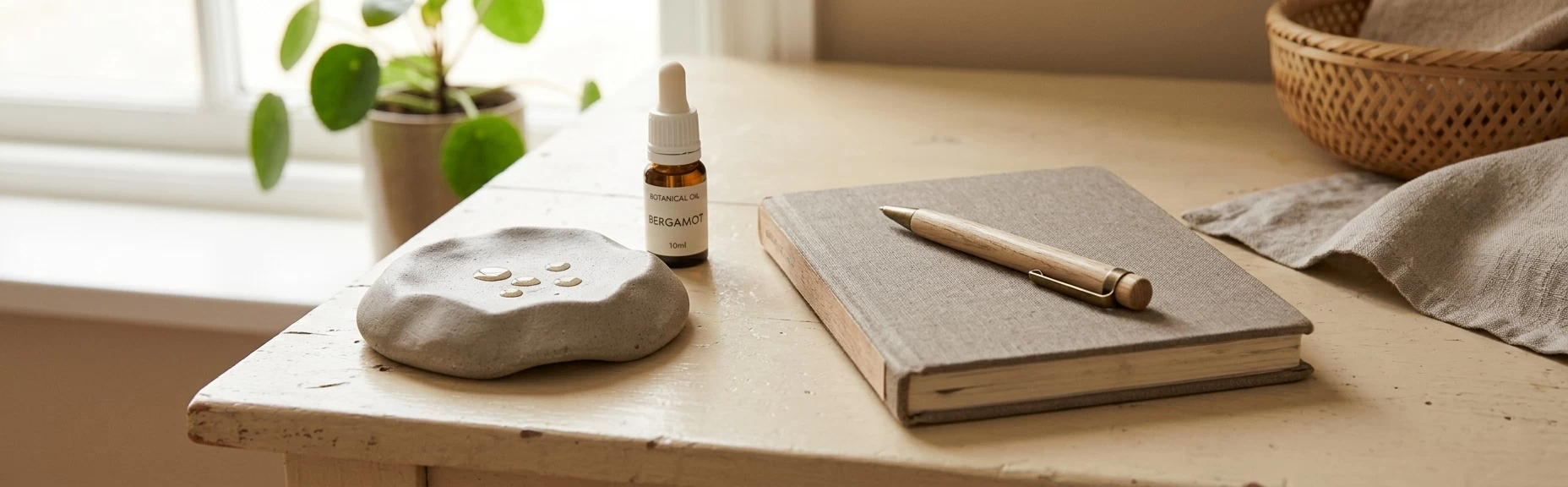
A few that work for me
1. The desk reset.
When I feel scattered, I stop and clear my desk. Not everything — just what‘s directly in front of me. I move the clutter aside. I wipe the surface. I place a single object in front of me — sometimes a ceramic diffuser stone with a drop of oil, sometimes just a smooth stone I keep on my desk.
The action itself takes less than two minutes. But it creates a boundary between the moment before and the moment after.
2. The one-minute breath.
This one sounds too simple to work. I close my eyes and take three slow breaths. That’s it. Not a meditation session. Not a breathing exercise from an app. Just three breaths.
I learned this from someone who used it as a simple way to interrupt a busy moment. It sounds almost too easy, but three slow breaths are often enough to make me notice where my attention has gone.
3. The scent shift.
This is the one I use most often. When I feel like I‘m losing focus, I change the scent in my space. A few drops of something fresh and clear on my diffuser stone — sometimes citrus, sometimes mint. It’s not about the scent itself. It‘s about the act of choosing it. That small decision interrupts the spiral.
4. The walk without a phone.
I take five minutes to walk outside. No headphones. No phone. I don’t go anywhere specific. I just move. The shift in physical space changes the state of my mind.
5. The object touch.
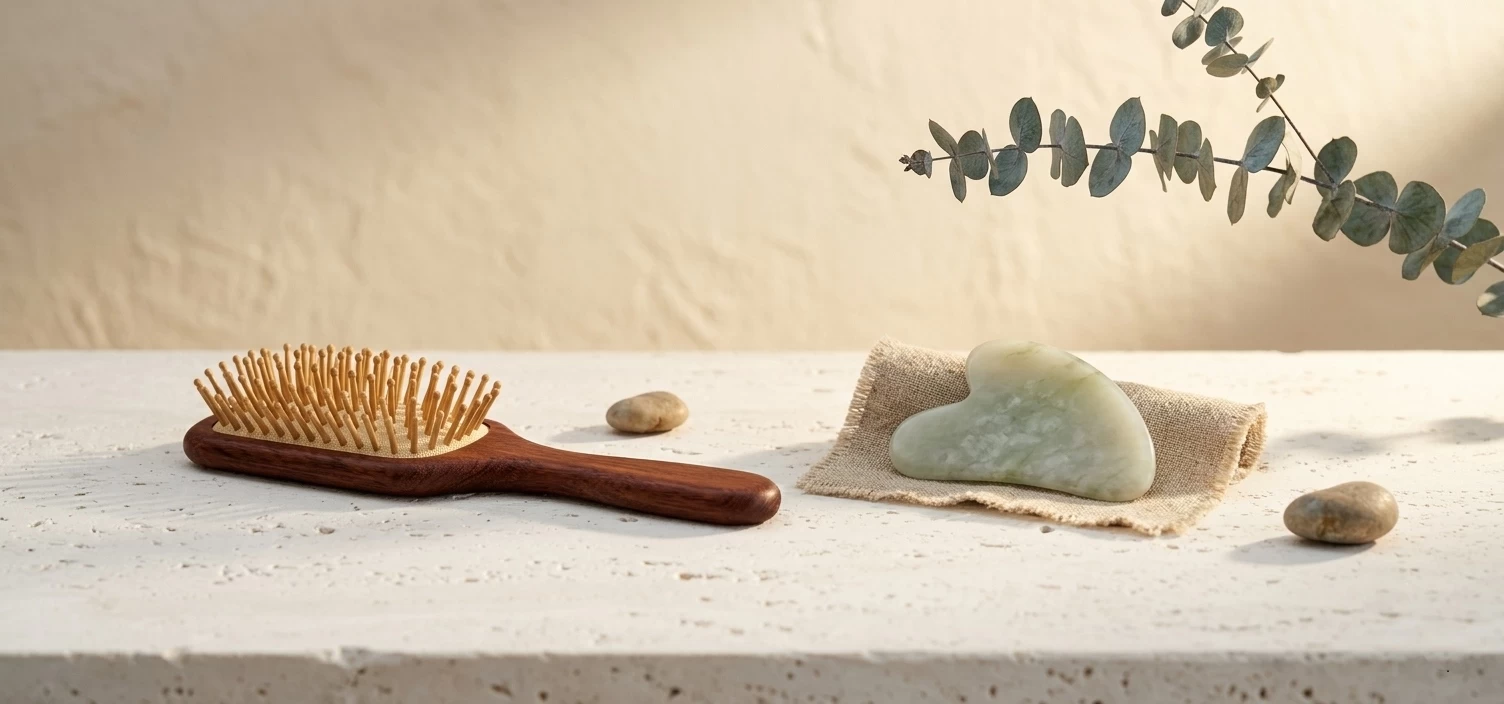
I keep a wooden comb on my desk. When I feel disconnected, I pick it up. I don‘t use it. I just hold it. The weight, the texture, the warmth — it brings me back to the physical world.
Why they work
Coping rituals work not because they’re powerful, but because they‘re repeated.
Each time you repeat one, it becomes more familiar. The scent, the breath, the touch — they begin to feel like small cues that it’s time to pause. You don‘t have to make a big decision. You simply know what to reach for.
You don’t need a system
The problem with most advice about stress is that it asks you to build a system. A whole routine. A set of habits you‘re supposed to maintain every day.
That’s not realistic for most of us.
What is realistic is having a few small things you can do in under two minutes. Things you don‘t have to think about. Things that are always there — on your desk, in your pocket, within reach.
That’s what a coping ritual is. Not a solution. Just a way back to yourself.
—
Find your own way back. Explore BOLAN's ceramic diffuser stones and everyday objects — quiet companions that are always there when you need to pause.


