

Walk through your front door after a long day. Does your home immediately feel like a place where you can exhale, or does it just feel like another room where tasks assemble?
Most of us don't need a larger house or a full interior redesign to feel at rest. What we often lack isn't space, but intention. When every surface is crowded with plastic, screens, and clutter, our minds stay subtly on edge.
A sanctuary isn't created by buying more things. It’s created by curate-ing a few intentional spots—small corners where natural textures, warm light, and quiet scents come together to slow your pulse.
Here is how to bring that sense of sanctuary into your daily living space, step by step.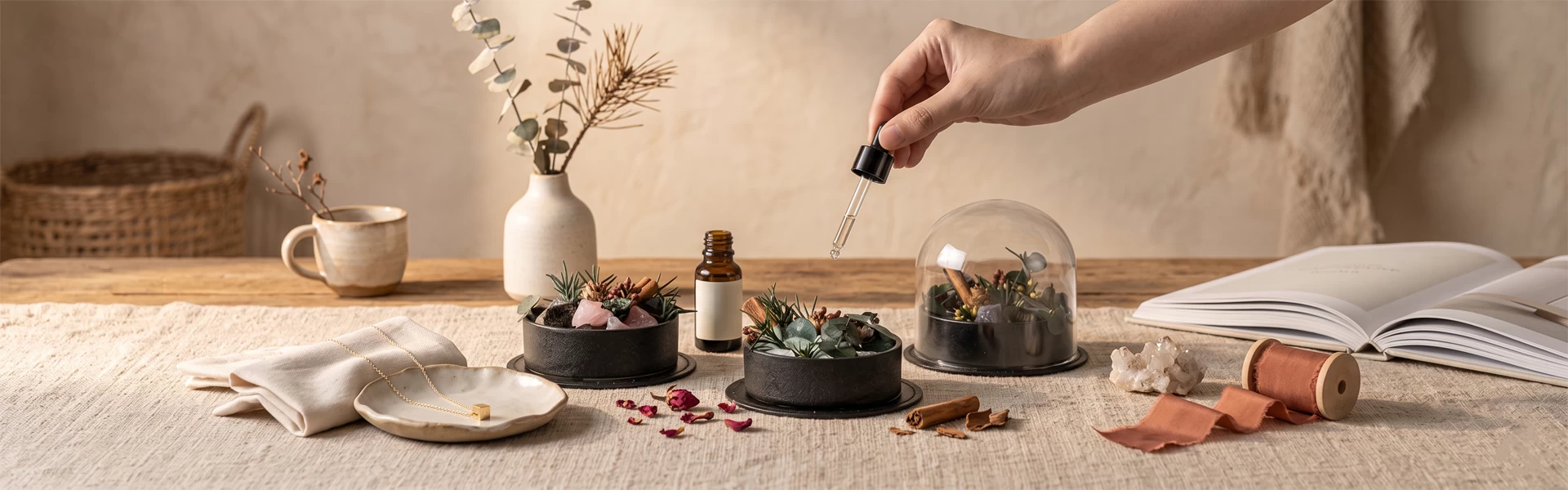
1. Clear the Visual Noise
Before adding anything new, look at where your eyes land when you sit down.
Visual clutter creates mental clutter. The pile of unopened mail on the console, tangled charger cables, or plastic packaging on the coffee table all send subtle signals to your brain that there is work left to do.
Pick one anchor surface: It could be your bedside table, a window sill, or a small corner of your desk.
Clear it completely: Strip away everything that belongs to a task, a screen, or a chore.
Keep only what resets you: Leave just one or two quiet objects—a textured stone bowl, a small wooden tray, or a single ceramic cup.
Giving your eyes a blank space to rest is the first step in giving your mind room to quiet down.
2. Introduce Unprocessed, Natural Materials
Modern homes are full of synthetic, smooth, cold surfaces—laminate desks, glass screens, and mass-produced plastics. They are functional, but they offer nothing to our sense of touch.
To make a space feel alive and grounding, bring in materials shaped by nature:
Raw Mineral & Crystal: A heavy piece of unpolished amethyst, tourmaline, or a clear quartz specimen on a windowsill catches natural light and adds an organic weight to the room.
Weathered Wood & Botanical Elements: A simple piece of driftwood, a coarse sandalwood tray, or dried botanical sprigs bring a soft, imperfect texture that machine-made decor can never replicate.
When you touch something raw and uneven, your hands register something real. It breaks the cycle of endless glass-screen tapping.
3. Layer Scent into the Architecture of the Room
We often think of interior design in terms of what we see, but scent defines the invisible atmosphere of a home. The moment a room smells different, your mood changes.
Instead of heavy artificial air fresheners that coat the air, use flame-free, slow-releasing natural diffusers:
Diffuser Stones & Raw Minerals: A few drops of pure essential oil poured directly onto porous ceramic, lava rock, or natural crystal stones allow scent to rise gradually throughout the day.
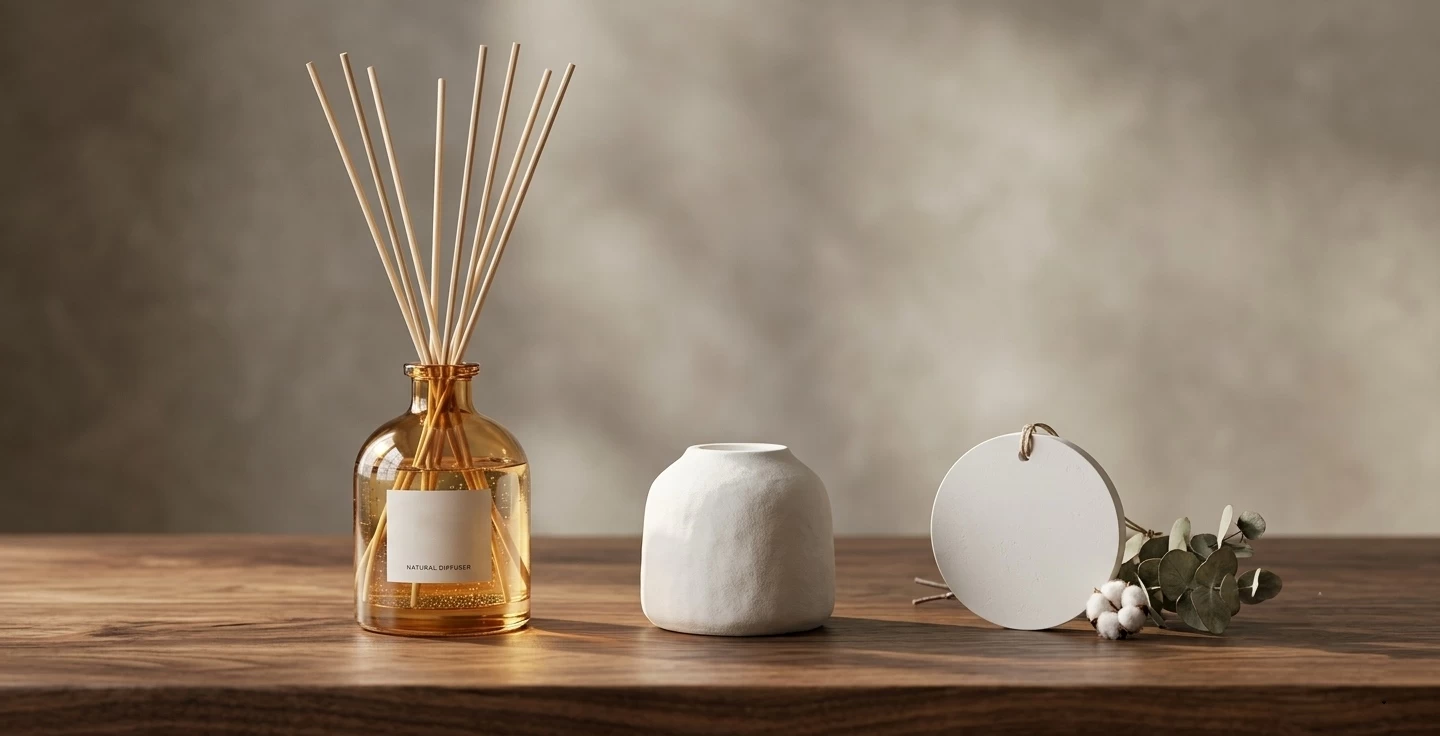
Wood Stack Diffusers: A small stack of natural wood absorbing fragrant oil slowly releases warm, dry notes of cedar or sandalwood into your workspace or reading corner.
Scent shouldn't overpower the room; it should be something you catch softly as you walk past—a quiet reminder that you are in a safe, tranquil space.
4. Create a "Pause Spot"
You don't need to transform your entire house at once. Start by dedicating one tiny zone purely to presence.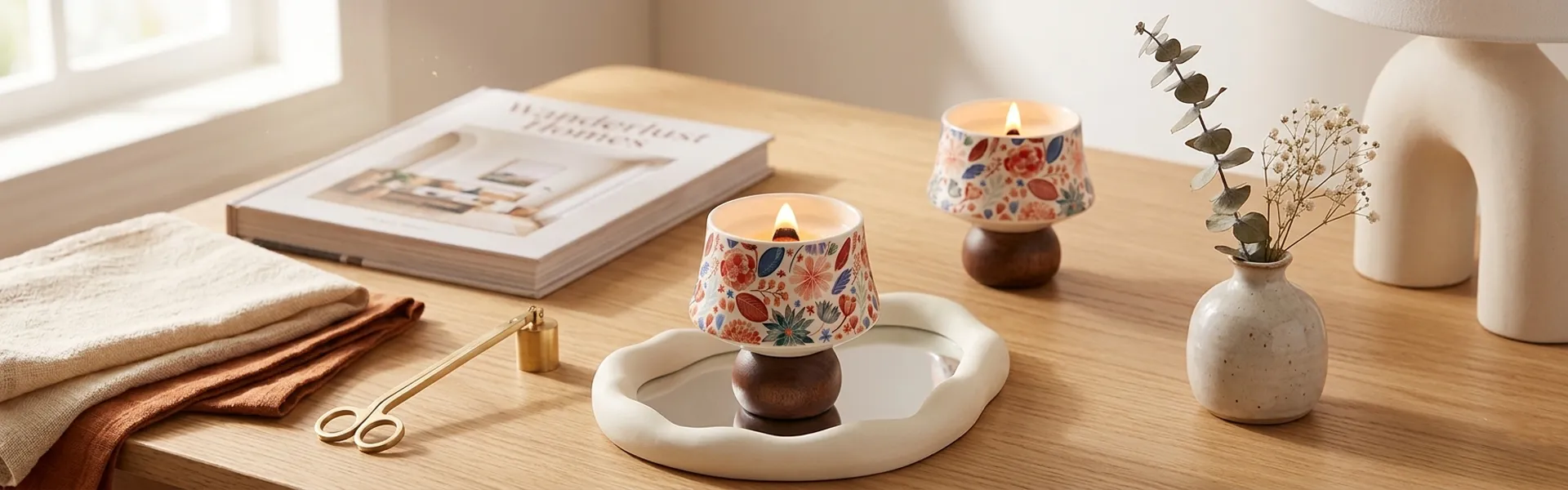
Set up a small tray with three simple elements:
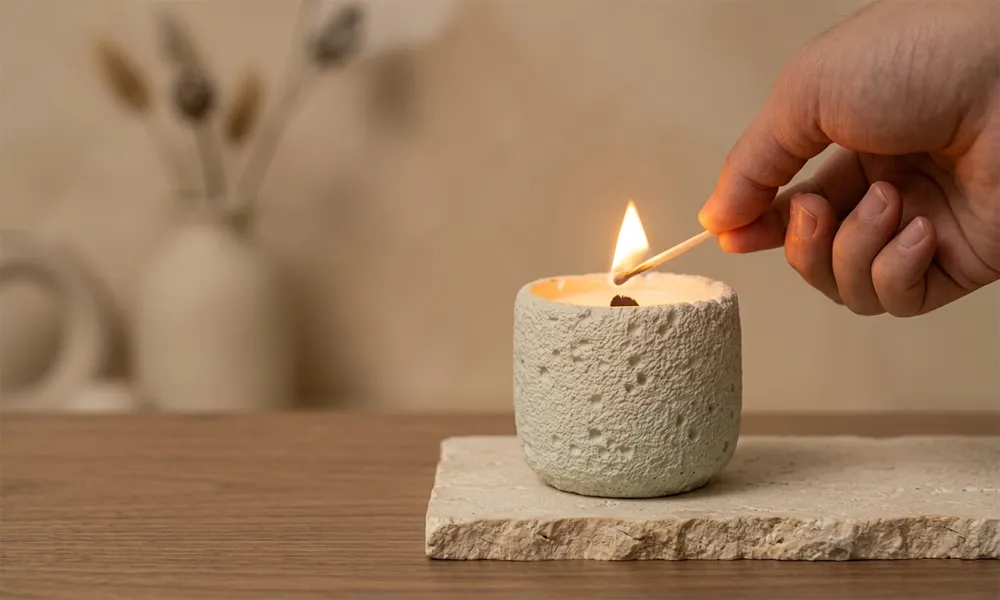
A source of soft light or scent: A ceramic jar candle, a small incense coil, or a stone diffuser cup.
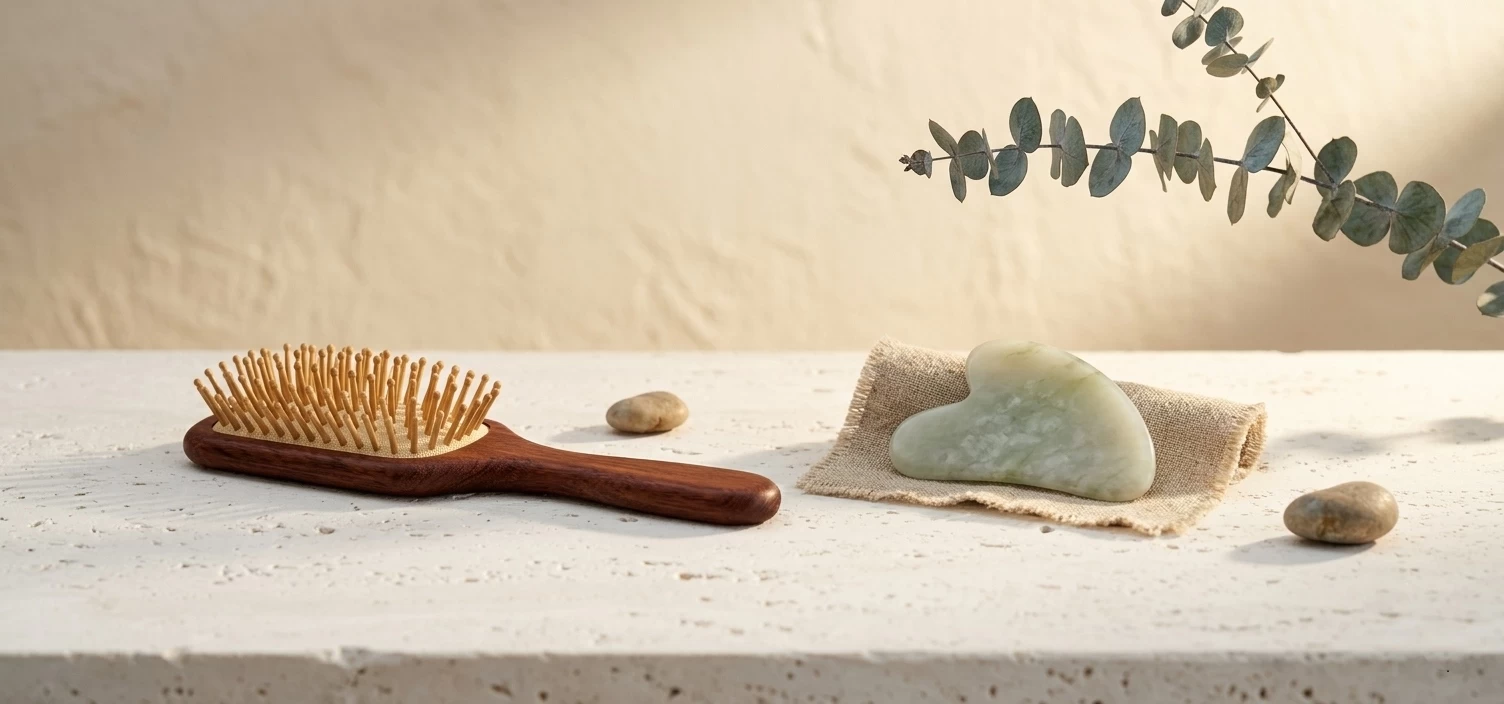
A tactile tool: A smooth crystal Gua Sha, a cool stone roller, or a sandalwood comb resting on a linen mat.
A natural anchor: A single piece of raw crystal or bead jewelry that you wear or hold when you sit down.
Whenever you feel overwhelmed during the day, step away from your desk, walk over to this spot, and spend three minutes here. Light the incense, feel the cool surface of the stone, and take a breath.
[ Read: How to Build an Evening Ritual That Actually Helps You Unwind → ]


