A few years ago, I hit a wall. Not the dramatic kind — just a slow, quiet exhaustion I couldn’t name. I was sleeping enough, eating well, exercising. But I felt foggy. Disconnected from my own rhythm.
I tried everything. Better sleep hygiene. Less screen time. Nothing moved the needle.
Then I started paying attention to scent. Not as decoration. As a tool.
The science behind it
Scent is the fastest sensory pathway to the brain. Olfactory signals bypass the thalamus and go straight to the limbic system — the part that handles emotion, memory, and stress response. Scent affects you before you even notice it.
Today, major fragrance houses are investing in “neuro-fragrances” — scents formulated to activate specific brain regions. Givaudan has collected over 200 million neural data points through brain imaging. Brands like The Nue Co. are launching clinically tested functional fragrances for joy and stress reduction. Research from Shanghai Institute of Technology shows that specific aroma compounds modulate dopamine and serotonin — the same chemicals targeted by antidepressants.
When I say scent can change how you feel, I’m being literal.
What I started doing
I stopped treating fragrance as a single “good smell.” I started using it intentionally, at specific times, for specific purposes.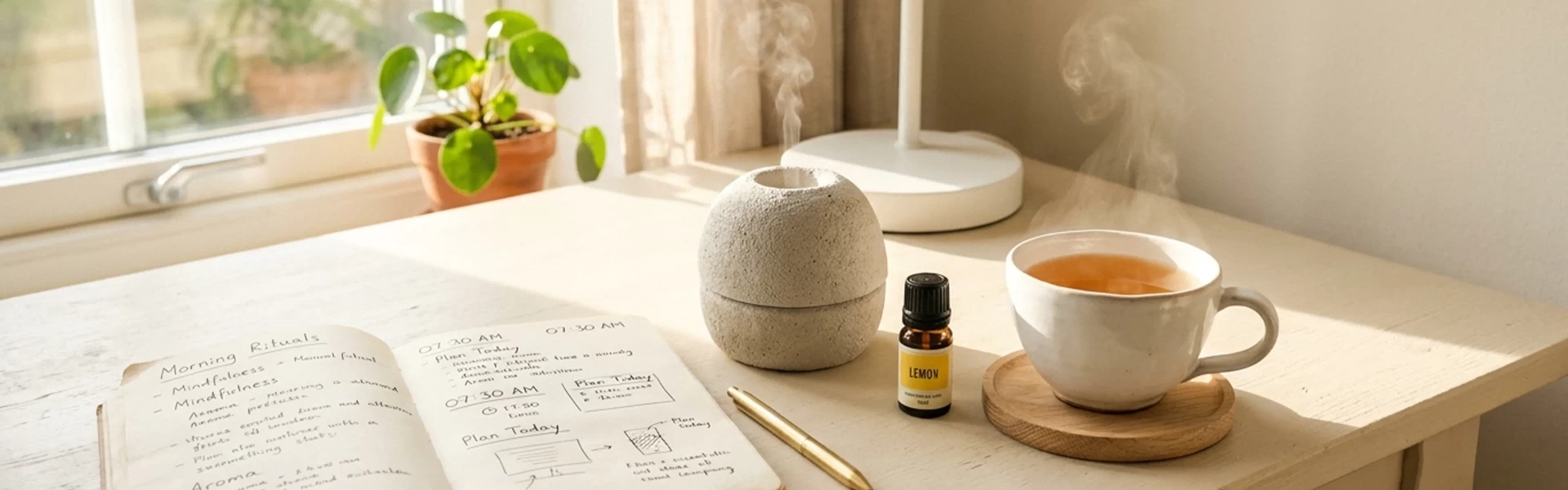
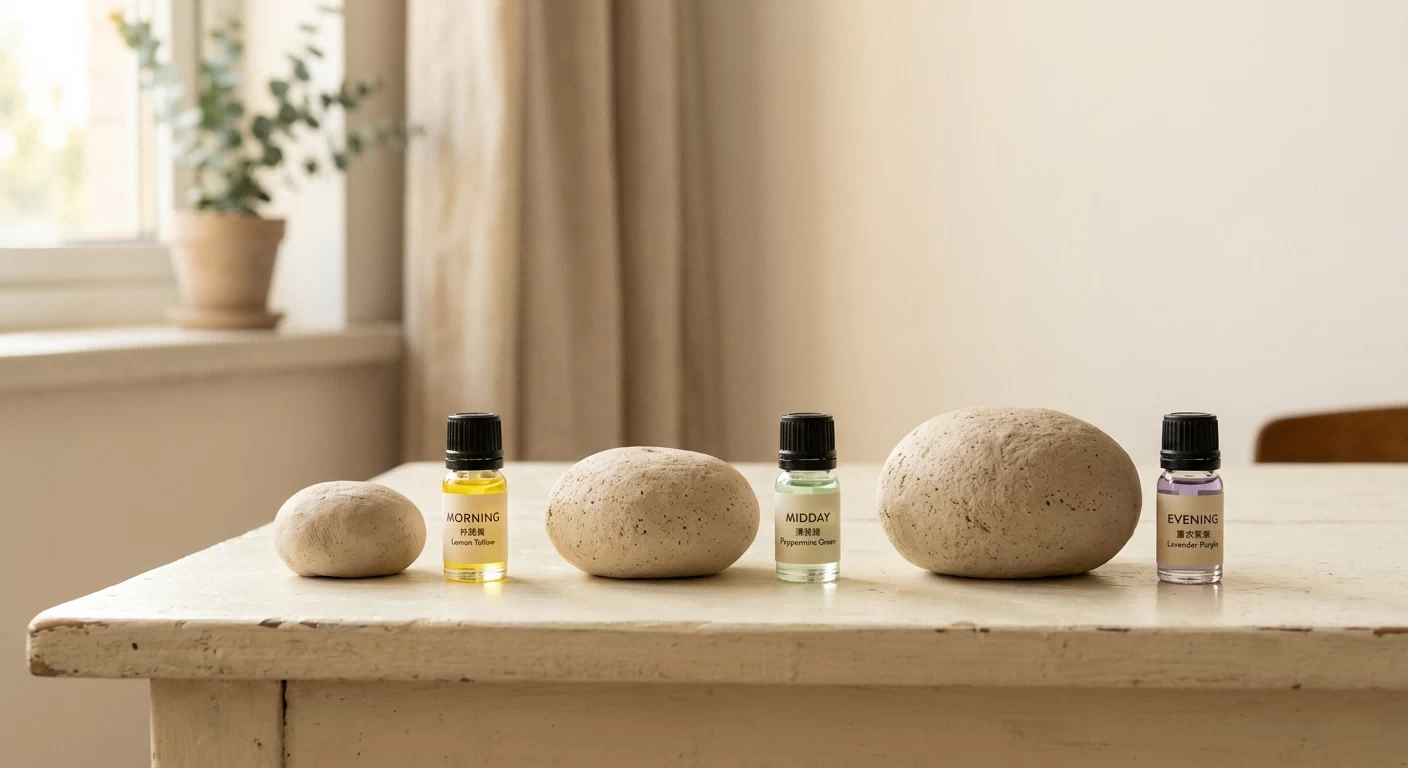
Morning: Calibrate & Wake Up Your Focus
Citrus and mint wake up the nervous system. Bergamot, lemon, peppermint — sharp, bright, slightly stimulating. One study found peppermint oil inhalation increased theta and alpha brainwaves, associated with relaxed alertness.
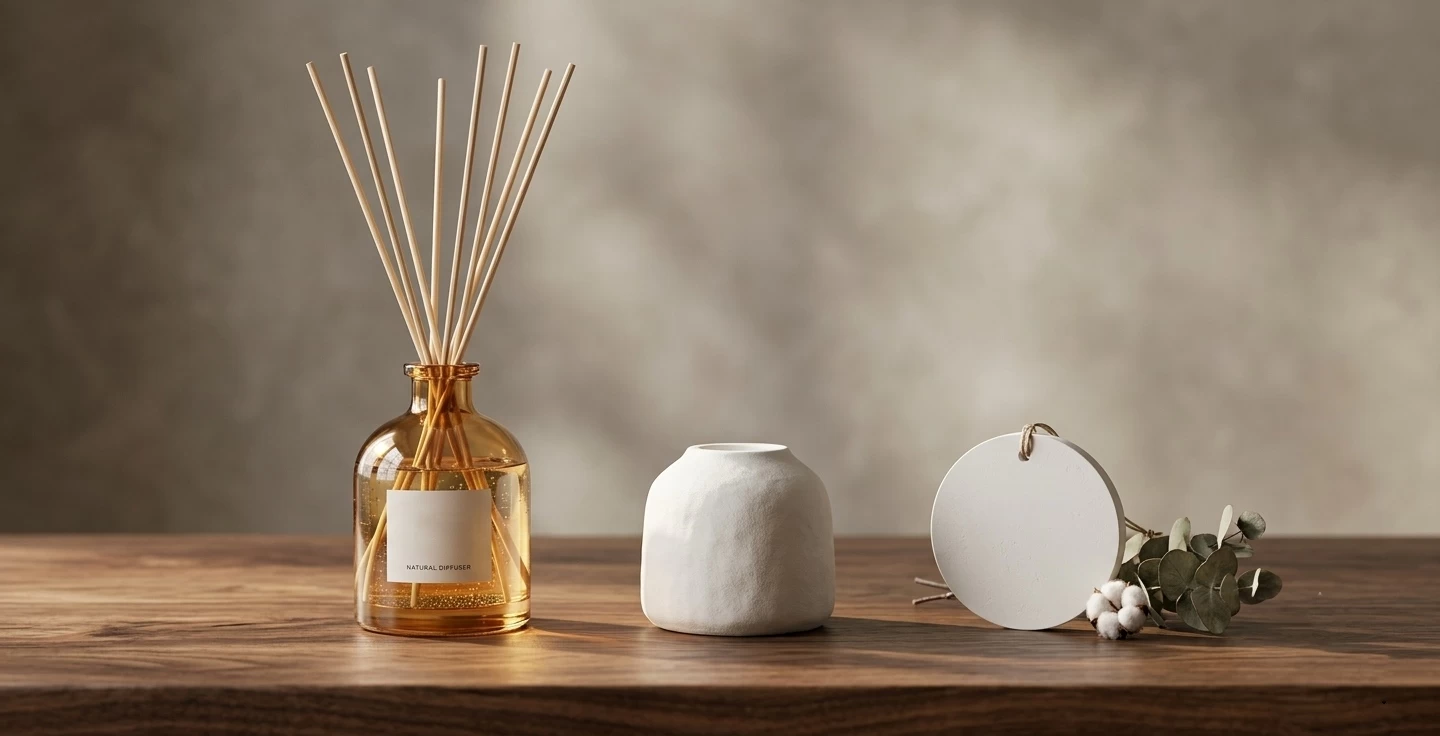
Two drops of lemon or peppermint on my desk diffuser before I check my phone. A small ritual that tells my brain: the day is starting now.
Afternoon: Refocus & Beat the 2 PM Slump
By 2pm, my attention frays. Instead of another coffee, I switch scents.
Rosemary and eucalyptus are clean, clear, slightly medicinal — a reset. Studies show specific aroma compounds enhance cognitive performance by modulating brainwave activity. Some neuro-fragrances are now clinically formulated to improve focus and memory.
I swap the oil, take a breath, and get back to work.
Evening: Downshift & Prepare for Sleep
I used to burn whatever candle smelled nicest. It felt relaxing, but it wasn’t helping me sleep.
Lavender modulates GABA receptors — the same ones targeted by sleep medications. One study found a proprietary fragrance reduced PSQI sleep scores from 9.44 to 4.11. Another found lavender inhalation reduced stress-related neural activity and helped the brain return to baseline after stress.
A couple drops of lavender on my nightstand diffuser about an hour before bed. Nothing complicated. Just a signal: time to slow down.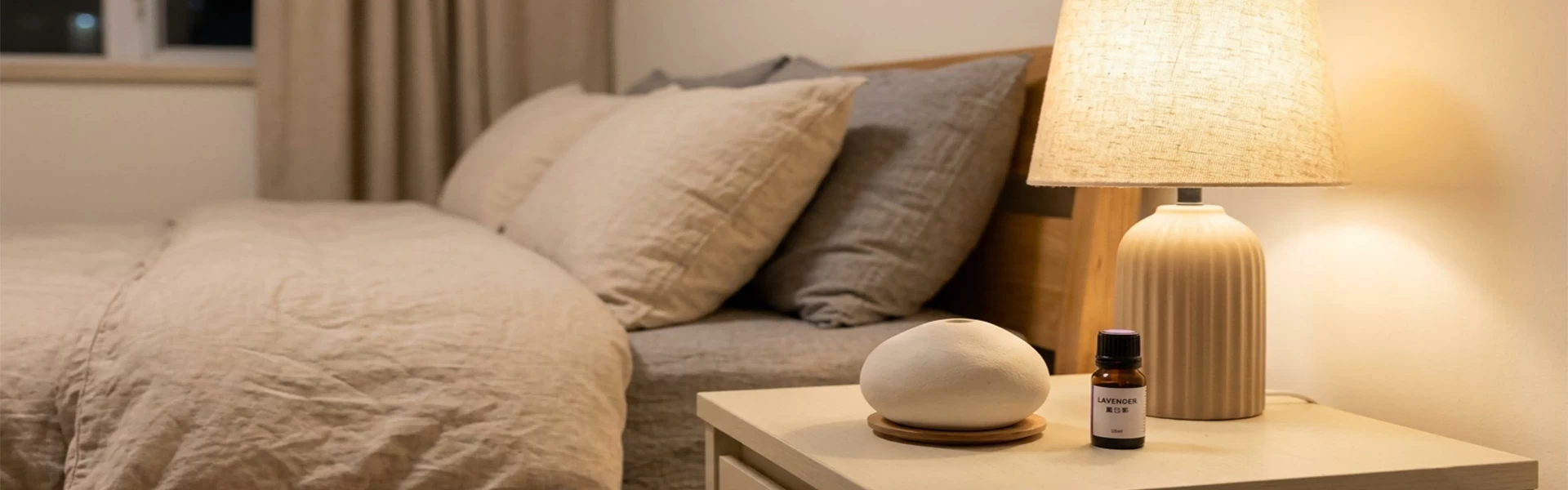
What I’ve noticed
It’s not dramatic. No sudden transformation. But over time, my energy feels more predictable. Morning fog lifts faster. Afternoon crashes are less severe. Sleep comes more easily — not every night, but more nights than before.
Scent isn’t a cure. It’s a tool. One that’s been under our noses the whole time.
If you want to try it
Start simple. Pick a morning scent — citrus or minty. Pick an evening scent — woody or floral. Use them consistently for a week. See if you notice a difference.
The science is real. The only test that matters is whether it works for you.