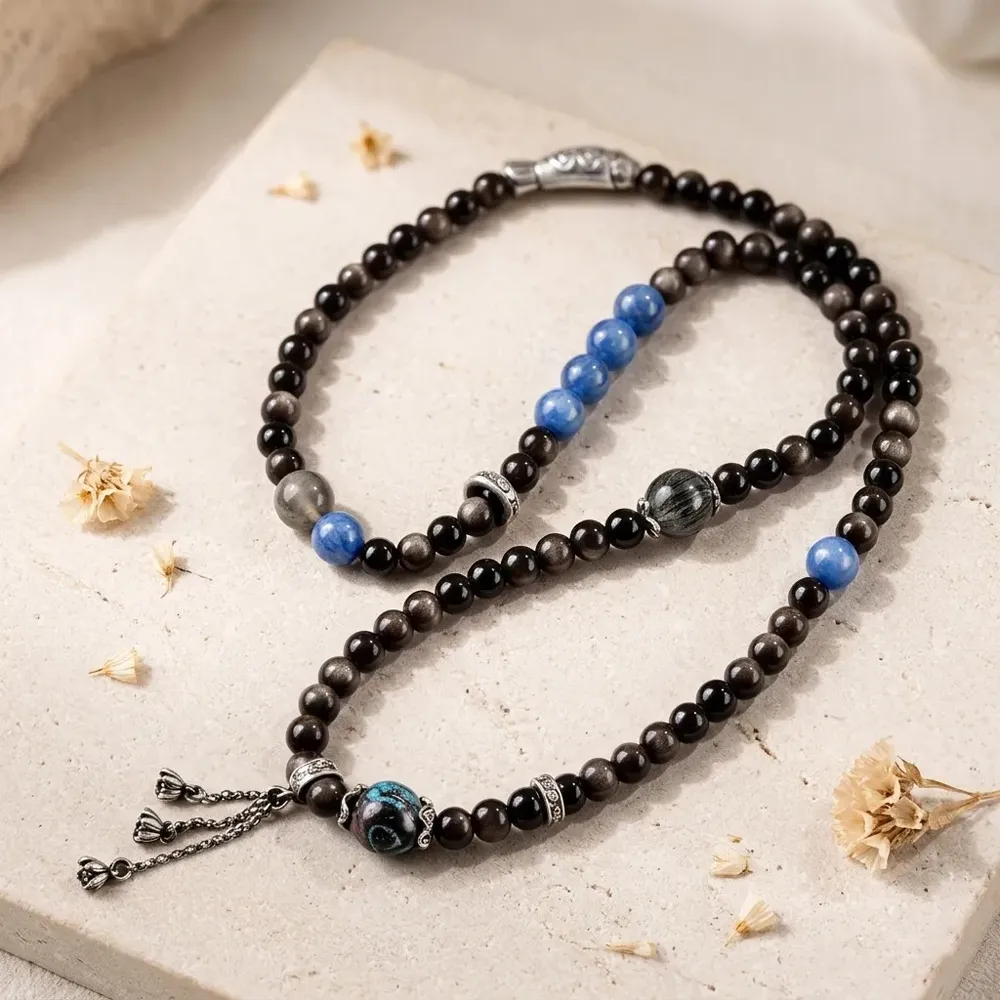
I noticed it at a dinner party, of all places. A woman across the table was gesturing with her hands while she talked, and her bracelet caught the candlelight. Most of it was dark—deep blue, almost black in that dim room. But one bead held something I couldn't quite name. Thin lines. Silver-black, suspended. Like someone had drawn a constellation inside it and forgotten to finish the drawing.
I leaned in later, when the plates were cleared, and asked if I could look closer.
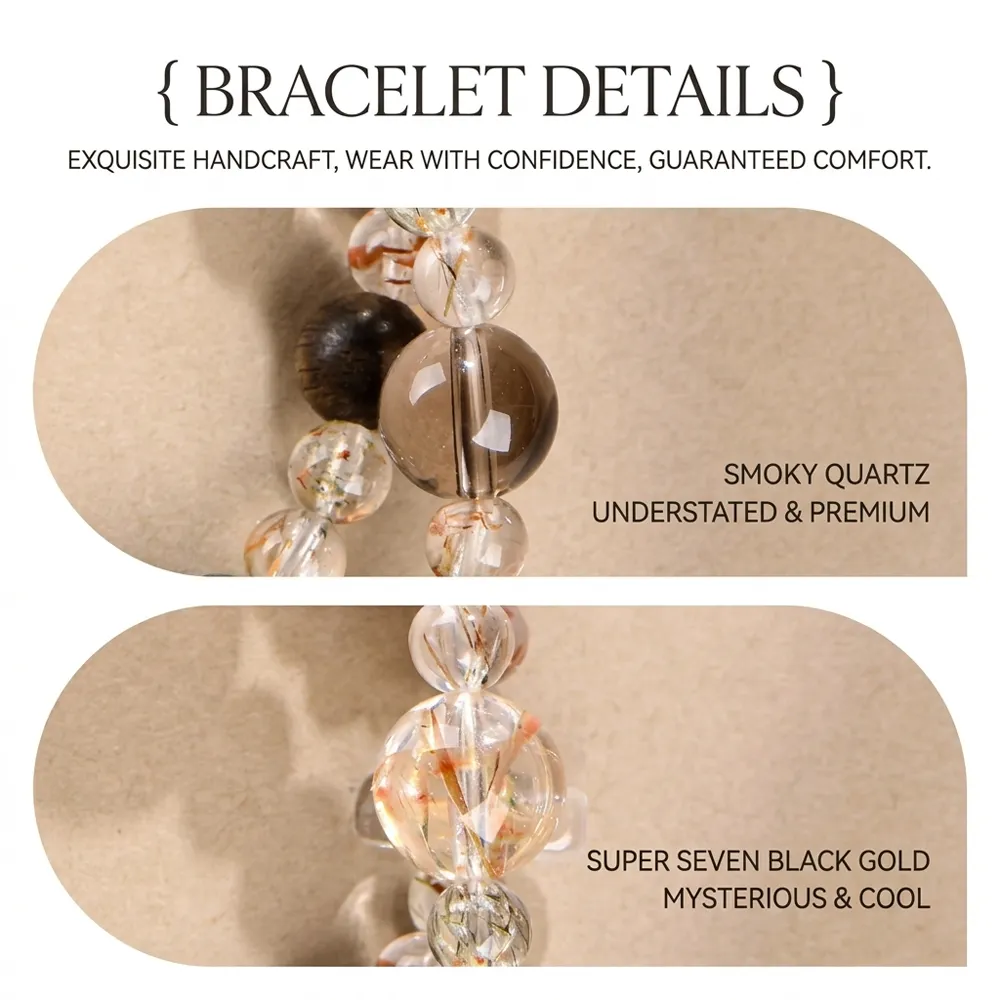
She held out her wrist. In better light, I saw it clearly: a transparent bead with black needles running through it, scattered at different angles. Not uniform. Not symmetrical. Just… there. Like they'd grown that way, which apparently they had.
"It's rutile," she said. "It grows inside the quartz."
I didn't know that was possible. But it is. And once I knew, I couldn't stop looking.
What Grows Inside
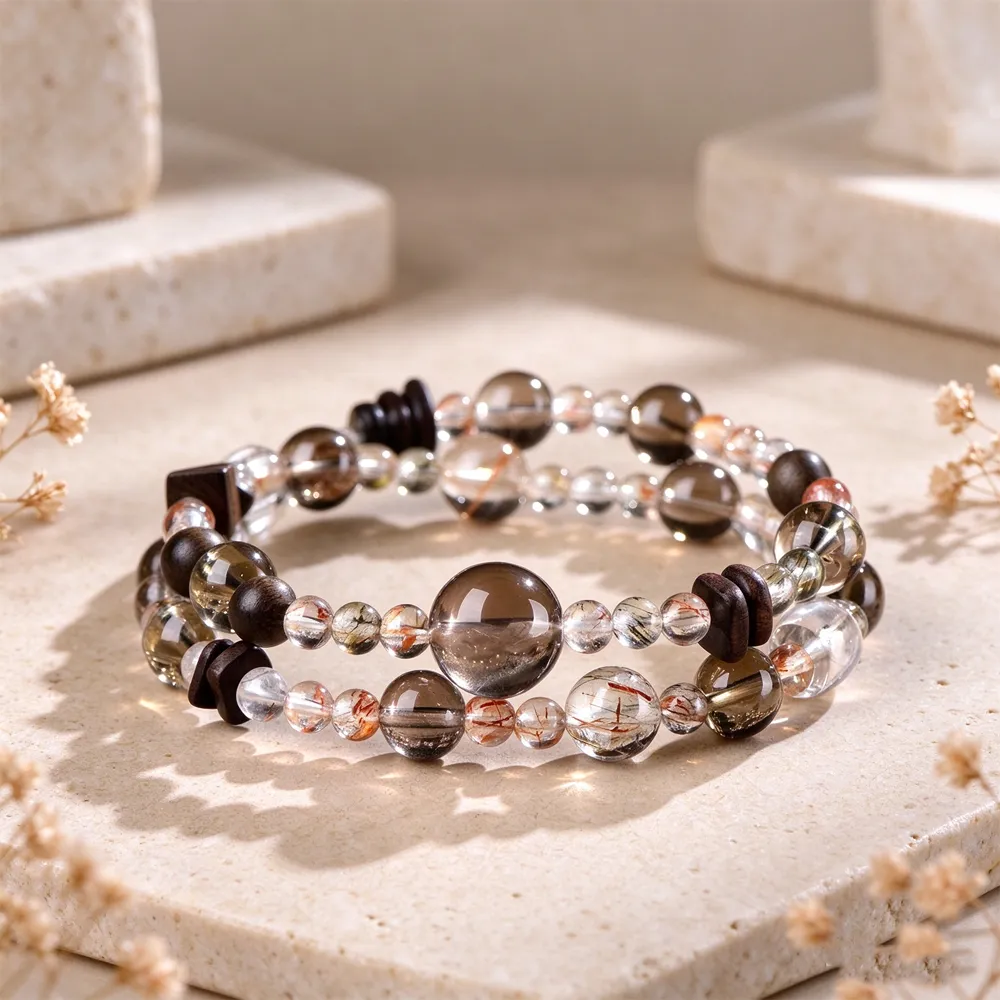
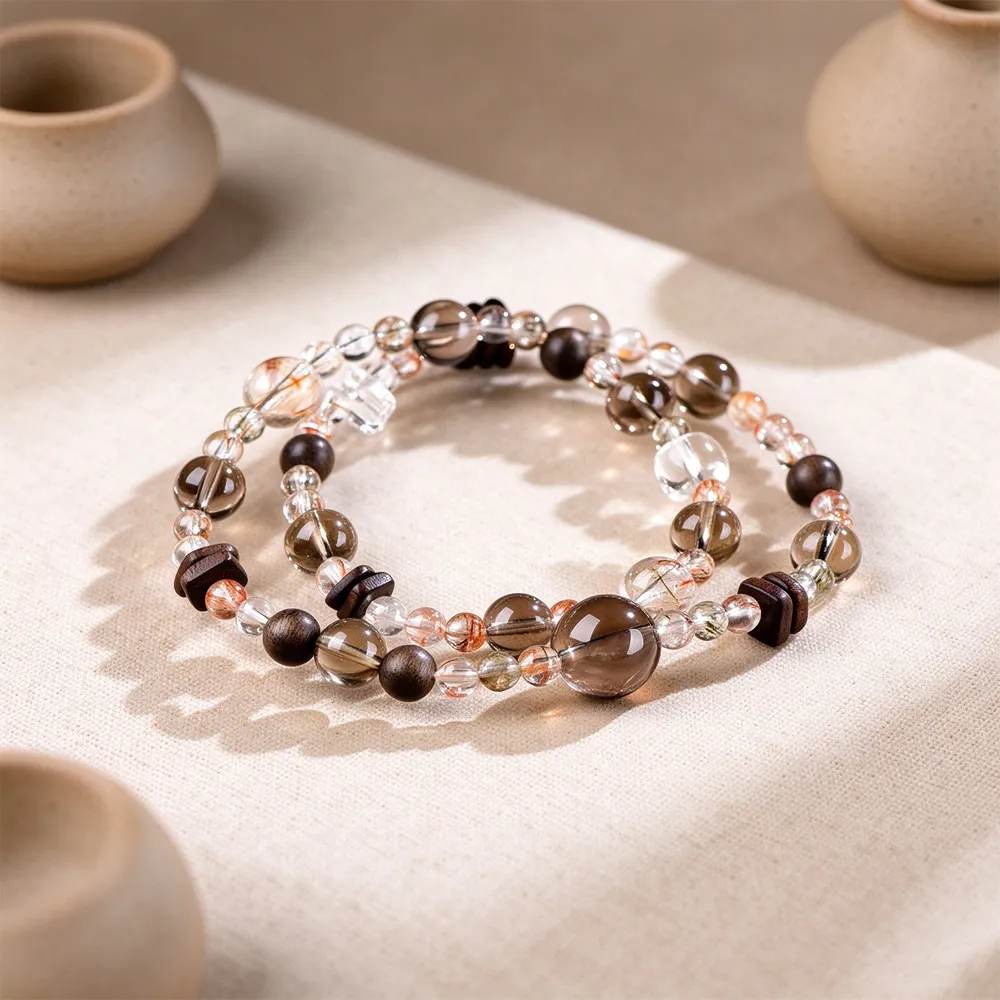
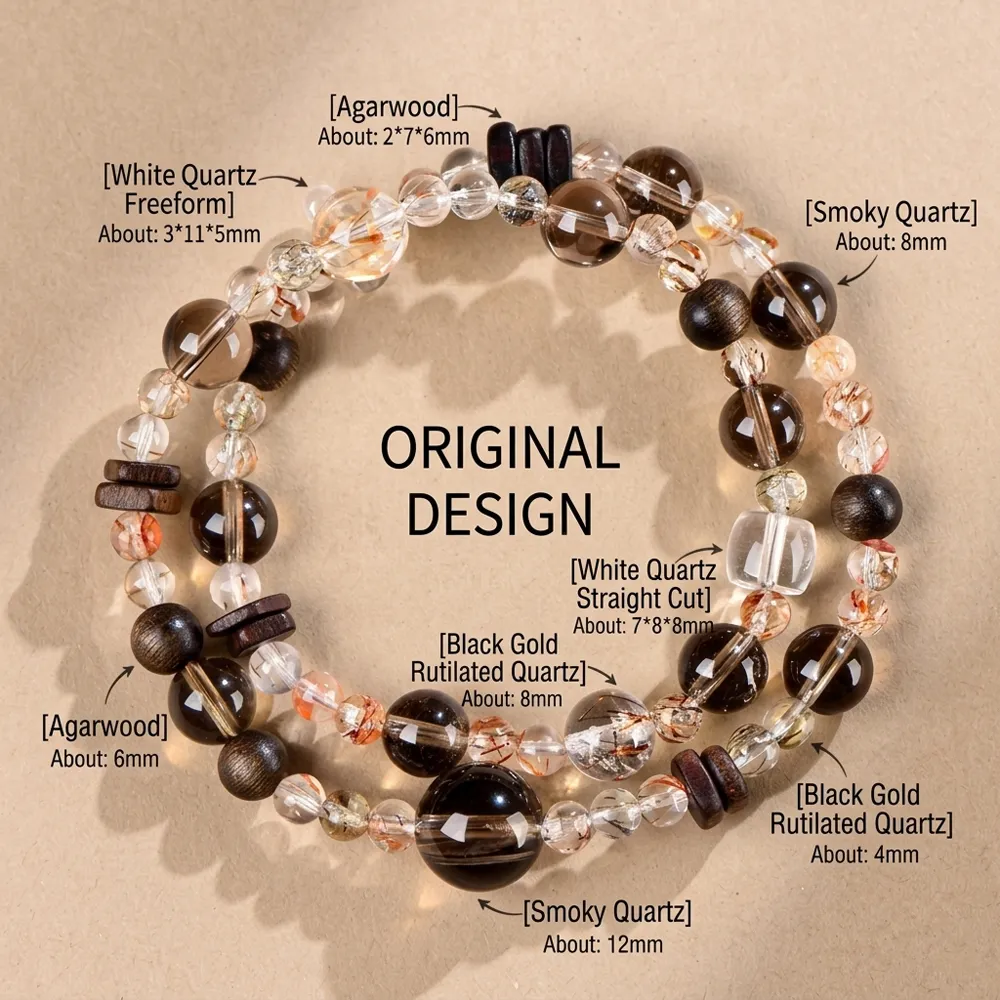
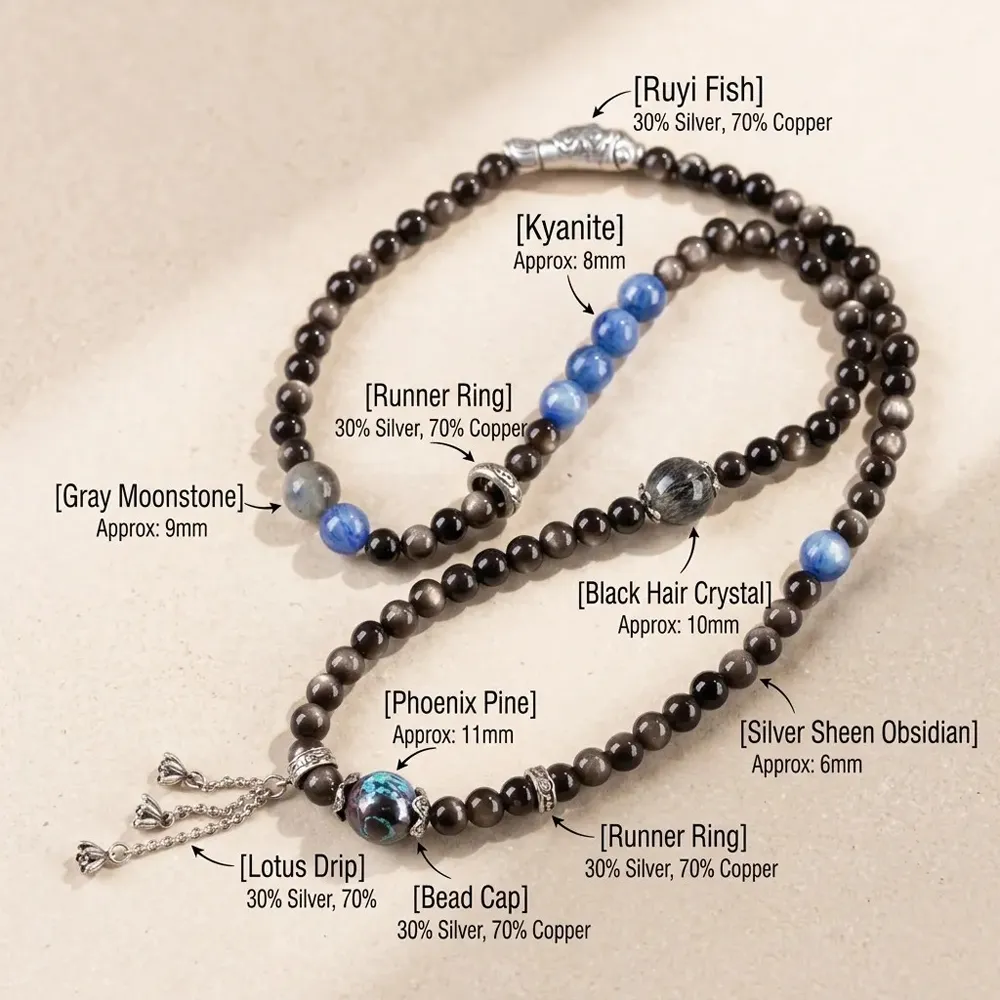
Black rutilated quartz is exactly what it sounds like: clear quartz with black rutile needles trapped inside. The needles form naturally, millions of years before anyone cuts or polishes or strings them onto a bracelet.
Some are dense. Some are sparse. Some cross each other. Some stand alone.
I think that's why I kept looking at her bracelet that night. Each bead was a tiny world. One had a cluster of needles at the top, like a crown. Another had a single line running through the center, sharp and deliberate. Another had threads so fine they looked like cracks, except they weren't—they were whole.
You can't plan that. You can't design it. You can only find it, cut it, and hope the pattern survives.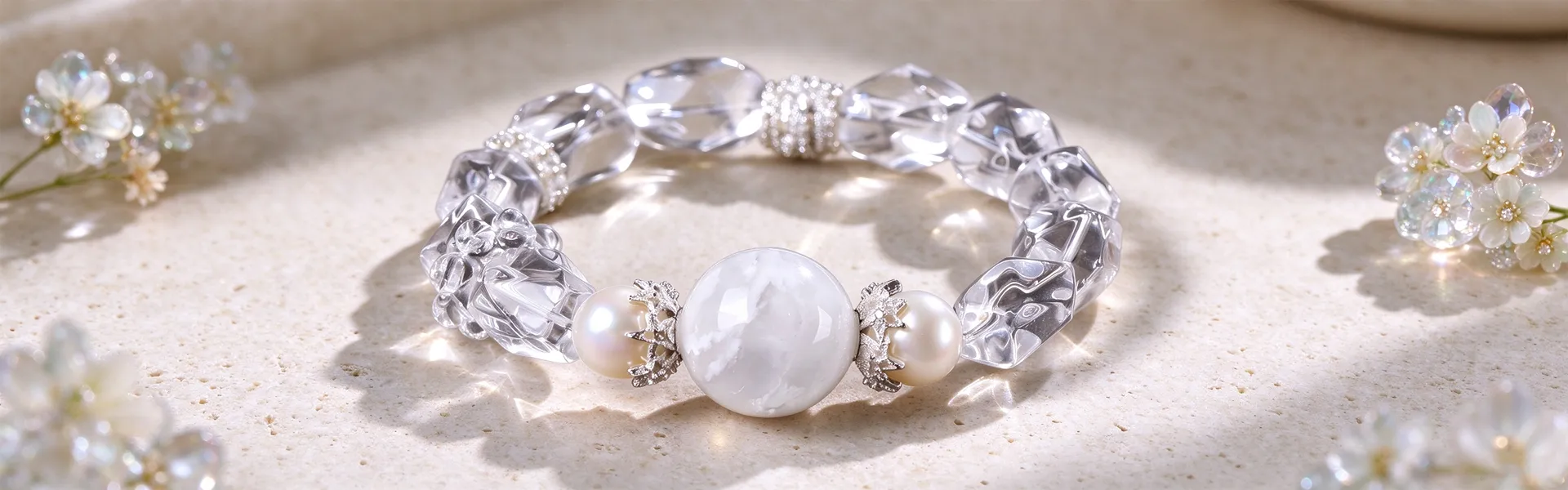
The Blue That Isn't Always Blue
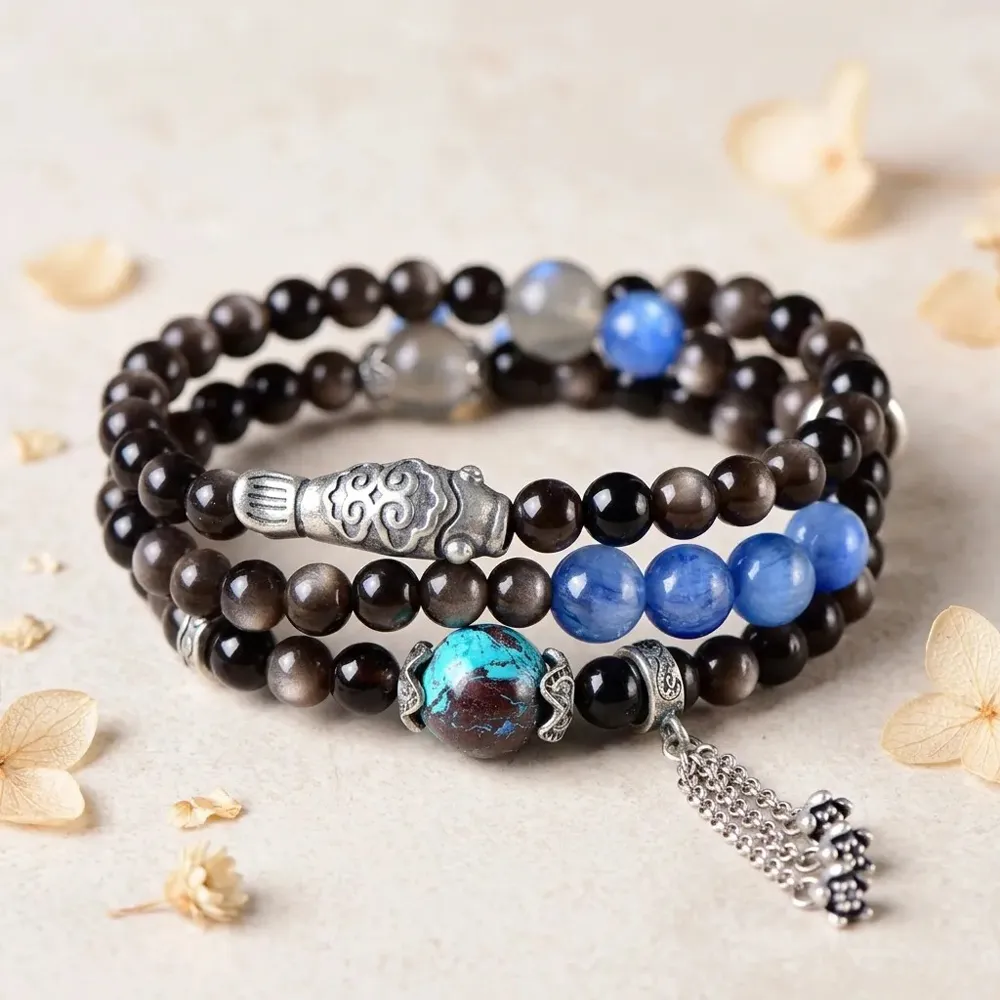
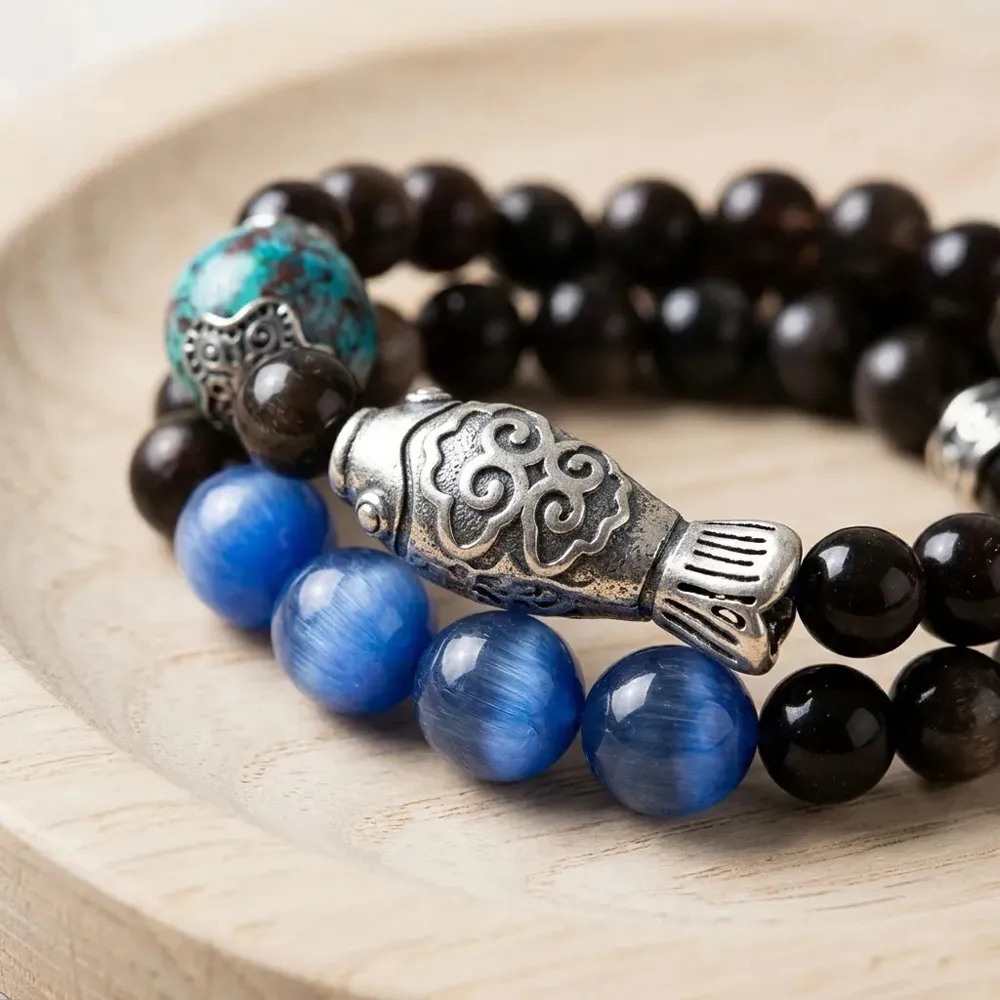
The kyanite beads surprised me more. In the dim restaurant light, they looked almost navy. But when she moved her wrist toward the window, they shifted—lighter, softer, with hints of grey and green underneath.
Kyanite does that. It changes depending on the angle, the light, the time of day. I've read that it's because of the way the crystal structure reflects light. But knowing the reason doesn't make it less strange to watch.
It's the same blue as deep water. The kind that looks one way from the surface and another way from below.
The Break in the Pattern
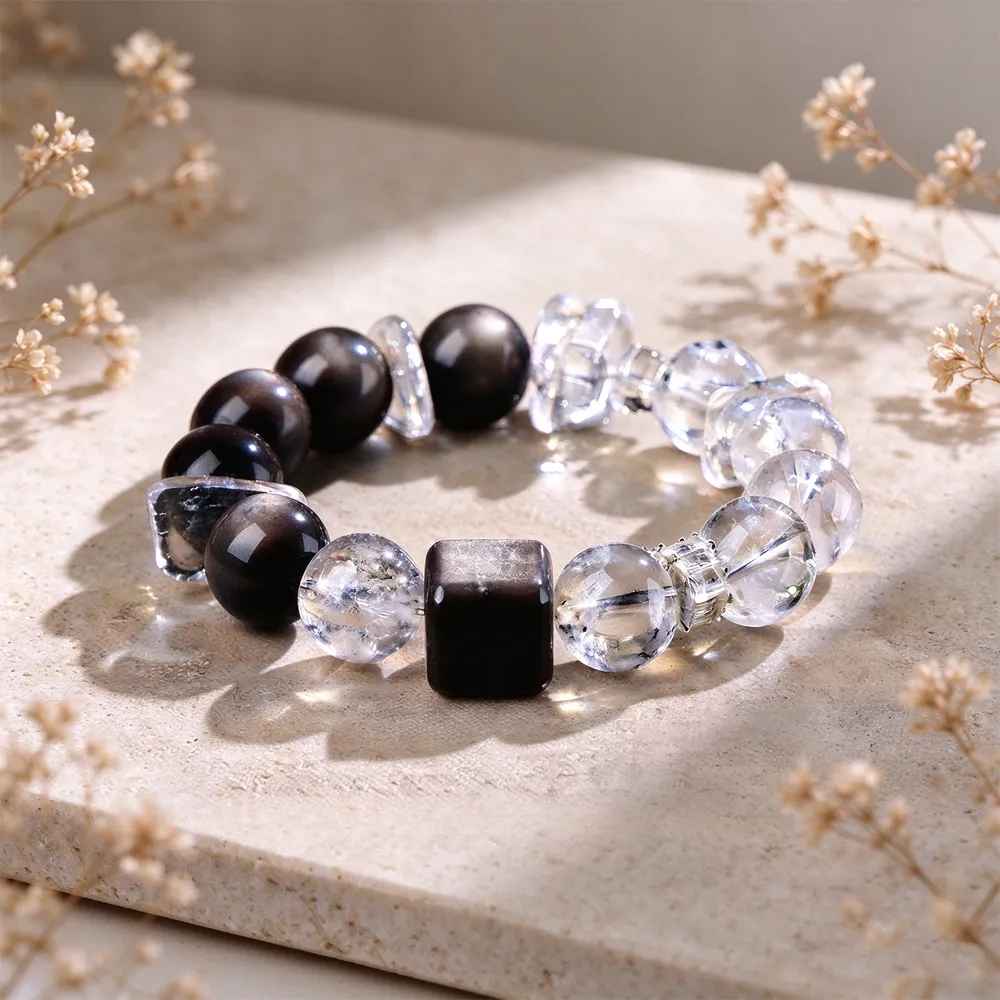
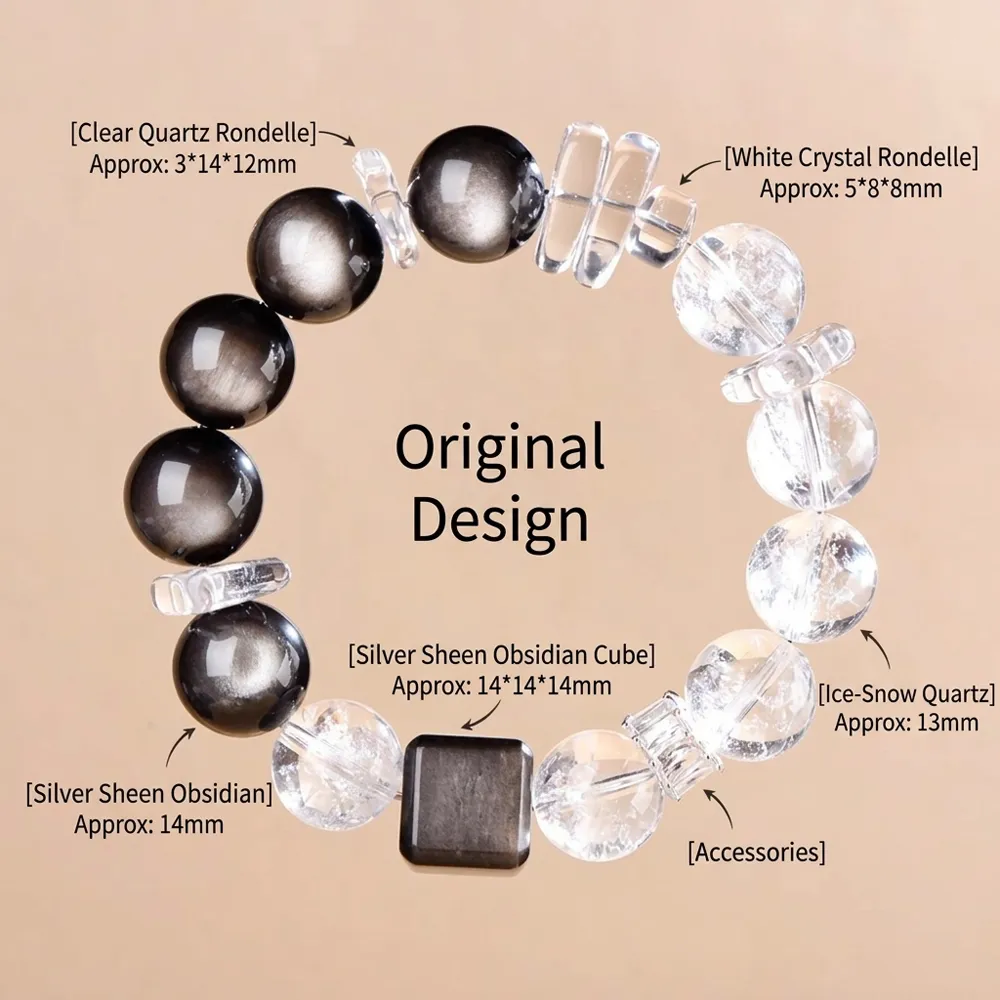
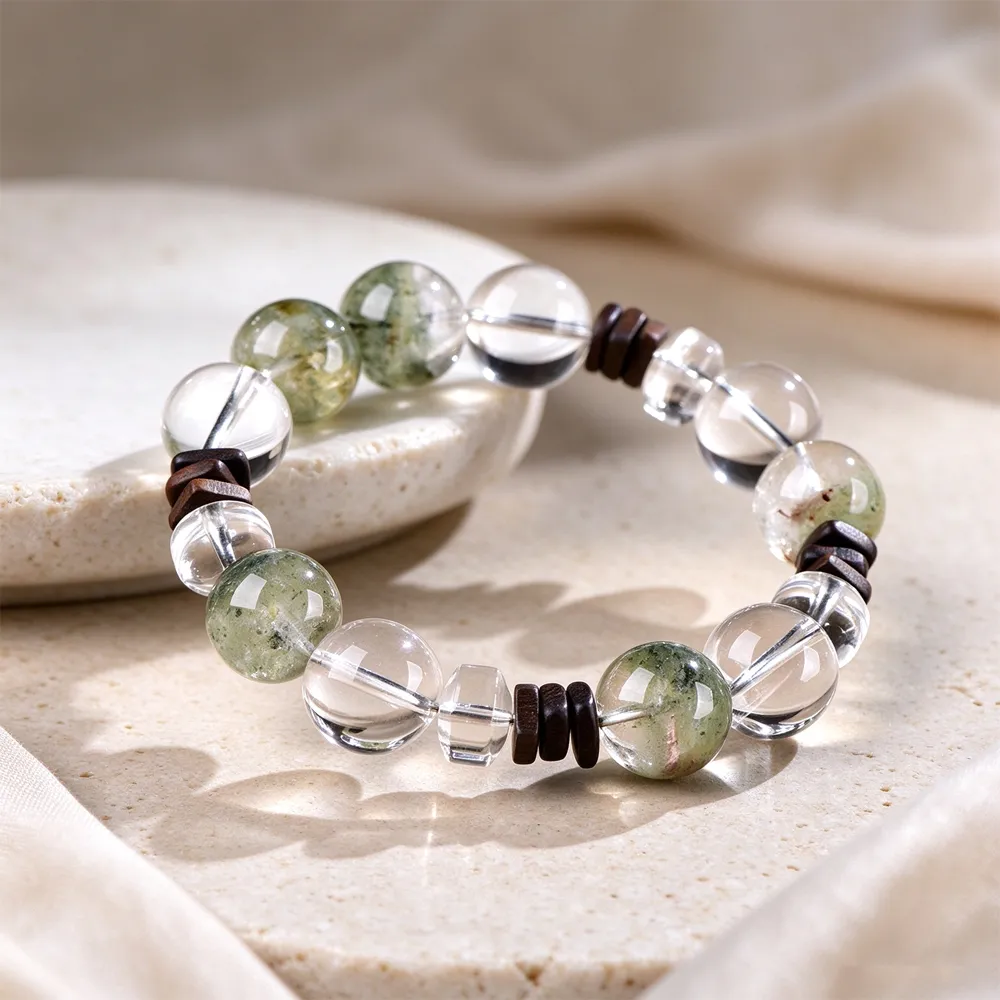
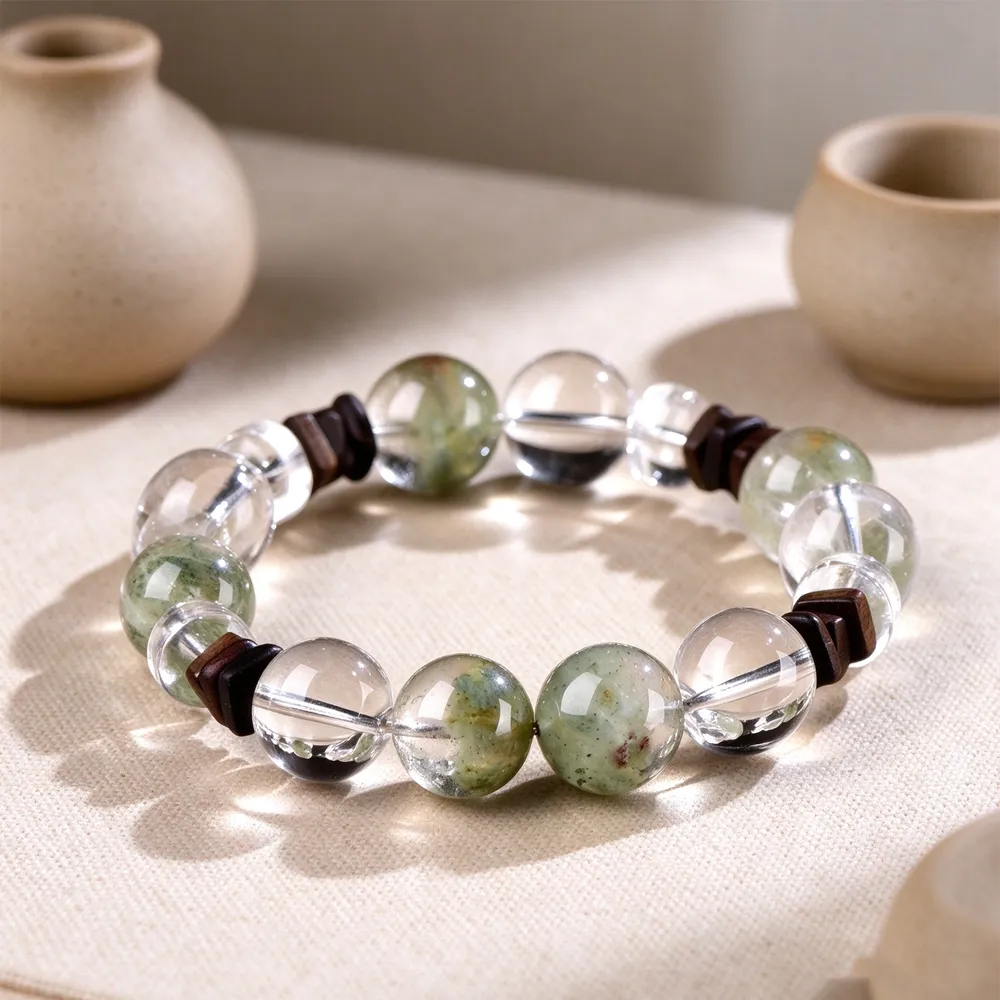
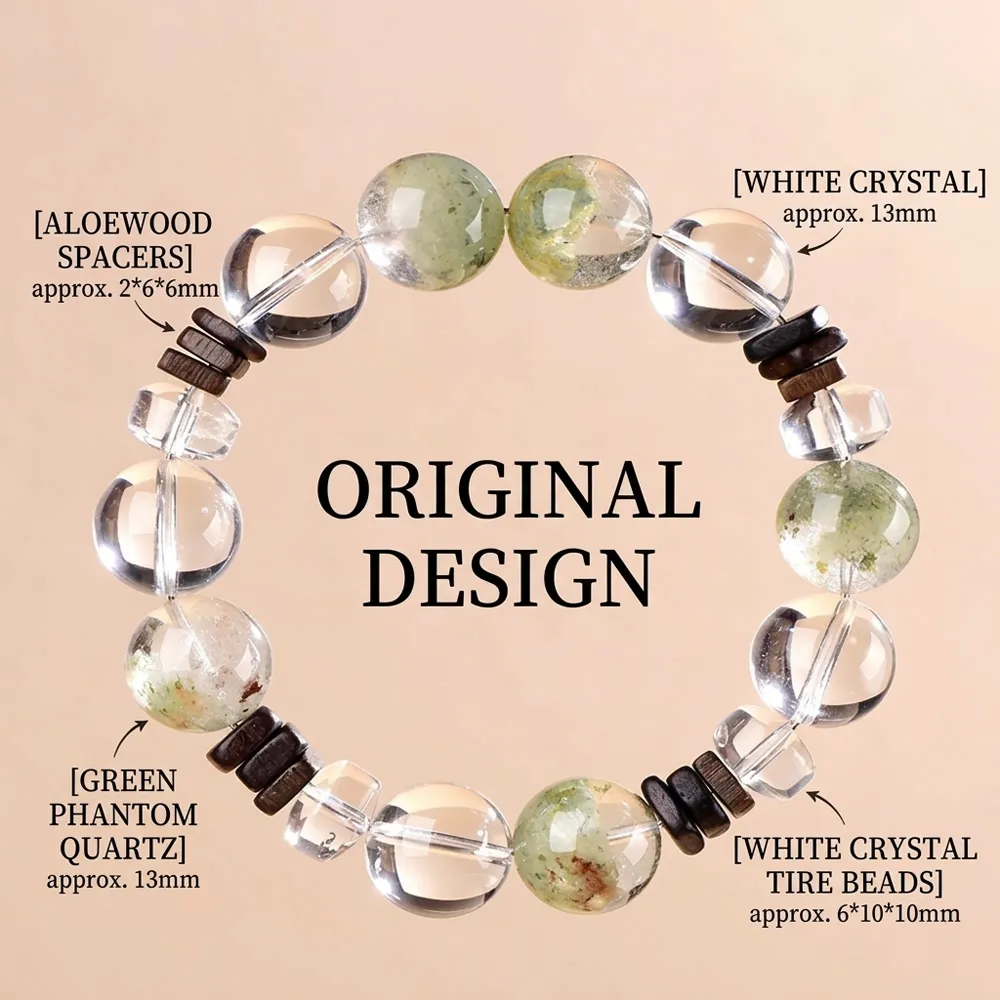
What I liked most, though, were the interruptions. A round bead, a round bead, a round bead—and then something else. A small loop of clear quartz. A larger, faceted piece, cut into sharp angles.
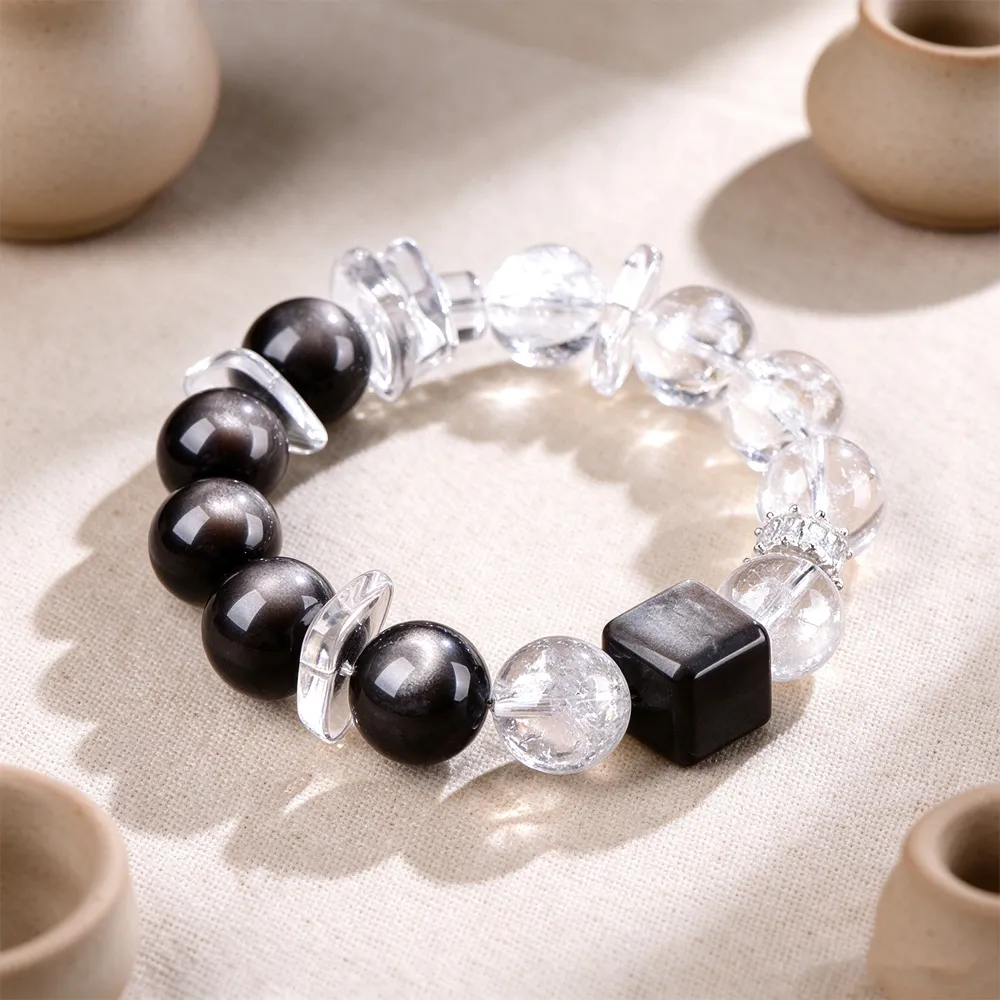
Those details shouldn't work. They break the rhythm. But they also give it somewhere to go. Without them, the bracelet would just be a string of dark beads. With them, it has pauses. Rest stops. Moments where the light catches differently.
I've noticed this in other things too—in music, in writing, in rooms. The break is what makes the pattern matter.
Wearing Something That Rewards Attention
I didn't buy the bracelet that night. But I thought about it for days afterward.
What stayed with me wasn't the color or the weight or the way it sat on her wrist. It was the fact that I'd looked at it three times and seen something different each time.
First: dark beads, nothing special. Second: a flash of blue. Third: entire worlds inside the transparent ones.
That's rare. Most jewelry shows you everything at once. You see it, you know it, you're done. This one keeps something back. It asks you to look again.
I like objects that do that. The ones that aren't in a hurry to be understood.
FAQ
What is black rutilated quartz?
Clear quartz with naturally formed black rutile needles inside. Each bead has its own pattern.
Does the kyanite change color?
It shifts tone depending on the light and angle. That's natural.
Is each bracelet different?
Yes. The stones vary, so no two are exactly alike.
Can I wear it every day?
Yes. Just keep it dry and avoid perfumes and chemicals.
How do I clean it?
Wipe with a soft, dry cloth after wearing. Store it in the pouch.
—
Look closer. There's more there than you think.