
The Warm One
After I wrote about my friend's two bracelets—the light one and the dark one—I kept thinking about a third one I'd seen. Not on her wrist. On someone else's, a few weeks earlier. I hadn't asked about it at the time. But after I started paying attention to stones, I remembered it.
It was warm. Reddish-brown. Not bright. Not flashy. Just deep, like embers in a fireplace that have stopped flaming but haven't gone out yet.
I looked it up eventually. Red rutilated quartz.
The Opposite of Moonstone
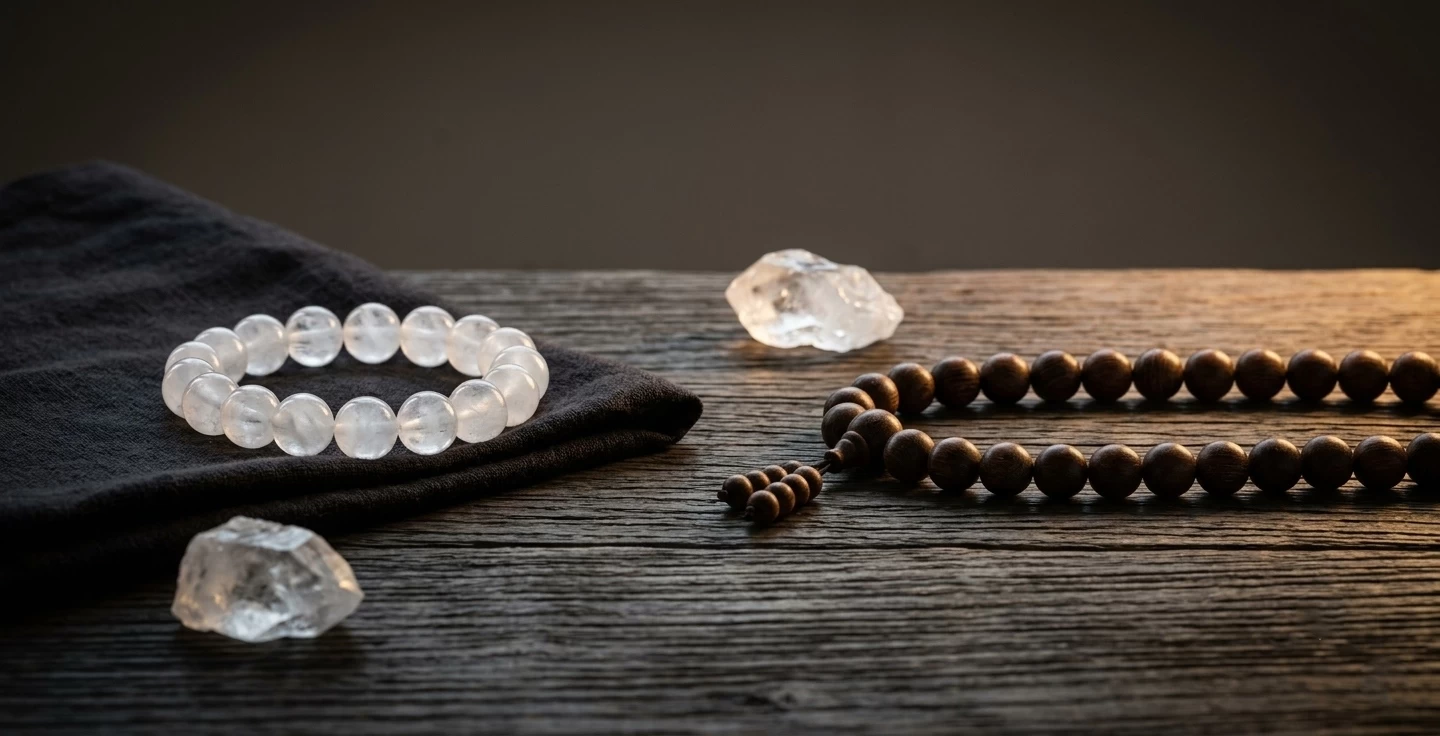
My friend's light bracelet was moonstone—pale, cool, translucent. It caught light from the outside and threw it back softly. Quiet in a different way.
This one was the reverse. The color came from inside. The rutile needles suspended in the quartz were reddish-brown, some thin as threads, others thicker, crossing each other at angles. The stone didn't reflect light so much as hold it.
Moonstone is cool. This is warm. Moonstone is about surface. This is about depth.
I don't know why that contrast mattered to me. But it did.
What Embers Look Like
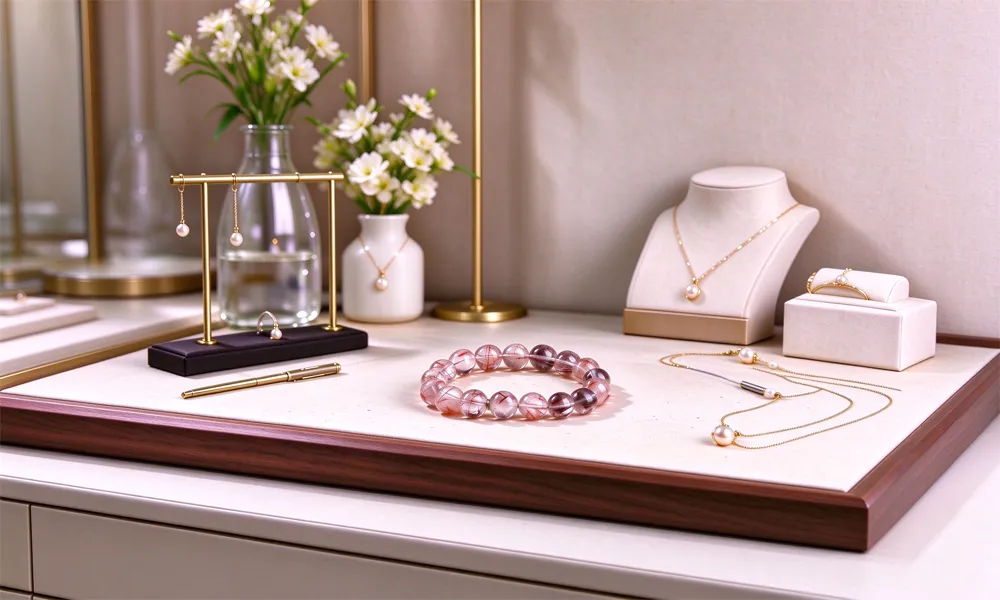
The bracelet had larger beads than the others I'd seen. Heavier. About seventeen of them, each one round and smooth on the surface, but filled with those tiny internal lines.
From a distance, it just looked like a dark red bracelet. Up close, it looked like something you could fall into. The needles weren't uniform. Some beads had more, some had less. Some were almost clear, with just a few threads running through. Others were dense, almost opaque.
I held it once, briefly. It felt substantial. Not heavy exactly. Just present.
The woman wearing it said she'd had it for a year. She said the color had deepened slightly, though I don't know if that was true or just her memory. Either way, she liked it more now than when she bought it.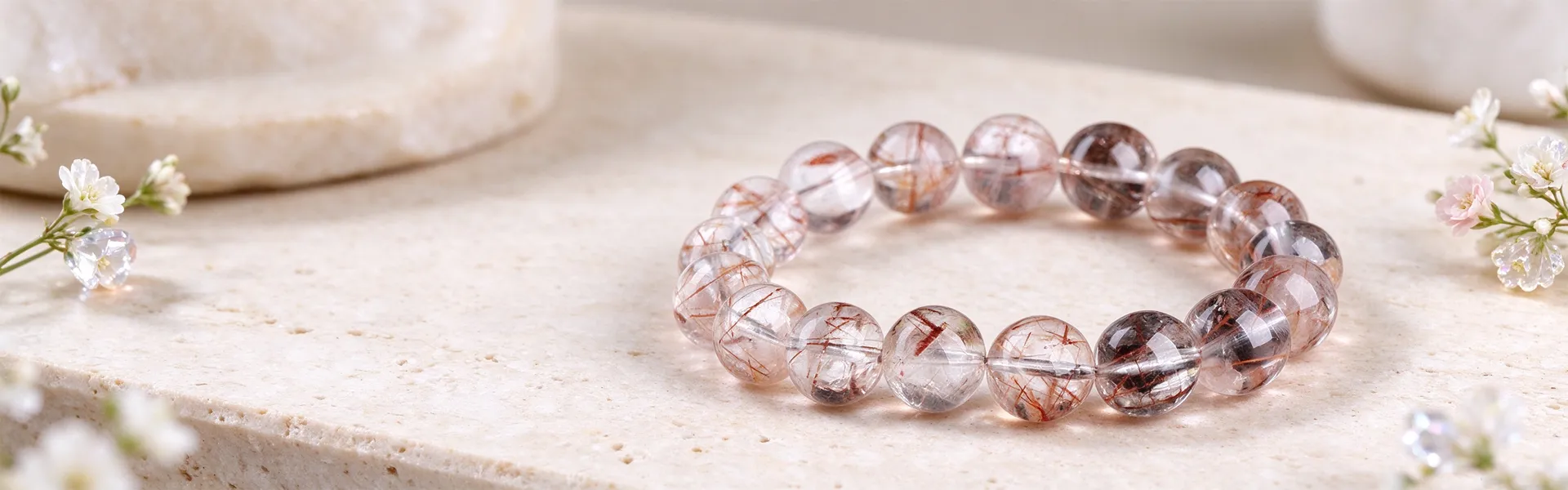
Why I Keep Writing About Stones
I've written about moonstone and obsidian. About snowflake quartz and labradorite. About kyanite with its black needles and black rutilated quartz with its silver ones.
I keep coming back to the same thing: stones that have something inside them. Not just color. Not just shine. But structure. Patterns that formed before anyone was around to see them.
A red rutilated quartz bead is a record of something. Heat, pressure, time. The needles inside grew that way. No one designed them. No one arranged them. They just are.
I think that's what I'm drawn to. Not the stone itself. The fact that it happened.
Wearing Warmth
I've started thinking about this bracelet as the warm counterpart to the cool ones I've written about. The light moonstone. The dark obsidian. The blue kyanite. All of them cool in tone, cool in feeling.
This one is different. It sits on the wrist like something that's been in the sun. Not hot. Just warm.
I don't own it yet. But I've thought about it. The same way I thought about the others. Not because I need another bracelet. But because I like the idea of having something warm to wear on days when everything else feels cold.
FAQ
What is red rutilated quartz?
Natural quartz with reddish-brown rutile needles suspended inside. Each bead has its own pattern.
Is it the same as black rutilated quartz?
Similar structure, different color. Black rutile is silver-black. Red rutile is warmer, earthier.
Are the beads large?
Yes. About 12mm each. The bracelet feels substantial on the wrist.
Can I wear it every day?
Yes. Just keep it dry and avoid perfumes and chemicals.
How do I clean it?
Wipe with a soft, dry cloth. Store it in the pouch.
Some stones reflect light. This one holds it.
Some stones reflect light. This one holds it.
Read: Two Stones, One Quiet Pair →


