
Two Stones, One Quiet Pair
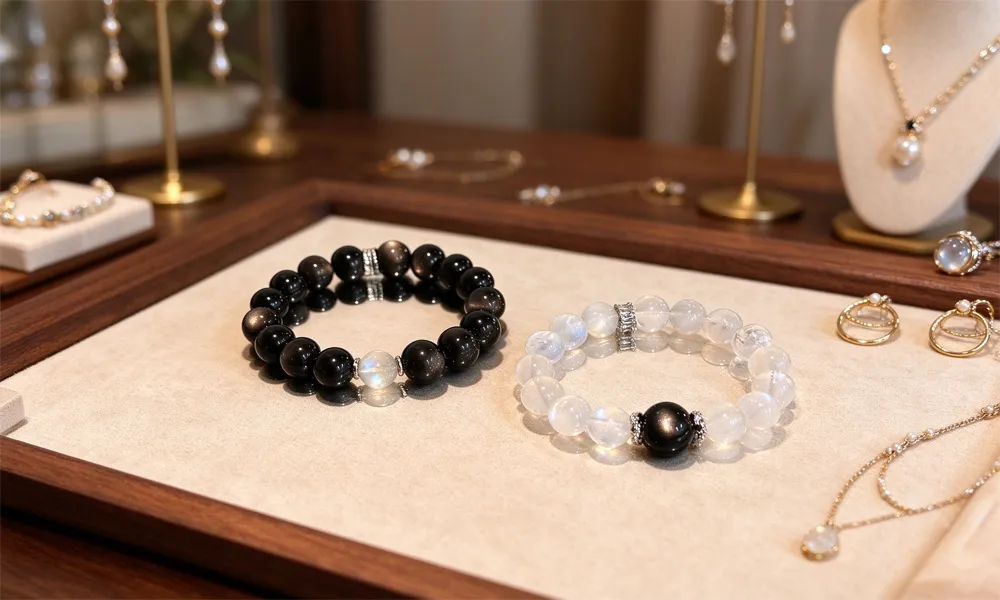
A friend of mine wears two bracelets now. One is light—pale beads with a single dark one at the center. The other is dark—deep beads with a single pale one at the center.
I noticed them a few weeks ago and asked if they were a set. She said yes, but that she'd bought them separately. First the light one. Then, a month later, the dark one. She said she hadn't planned to own both, but the first one kept making her think about its opposite.
That made sense to me. Some objects feel complete on their own. Others seem to be waiting for their counterpart.
The Light and the Dark
The two bracelets are mirror images of each other. The light version is made mostly of pale blue moonstone, with one dark obsidian bead sitting at the center. The dark version is the reverse—obsidian throughout, with a single moonstone bead at the middle.
I asked her which one she preferred. She said it depended on the day. The light one felt quieter, softer. The dark one felt more grounded, more present. On days when she wanted to disappear into the background, she wore the light. On days when she needed to feel steady, she wore the dark.
"But I wear them together most of the time," she said.
I asked why.
"Because they look better that way."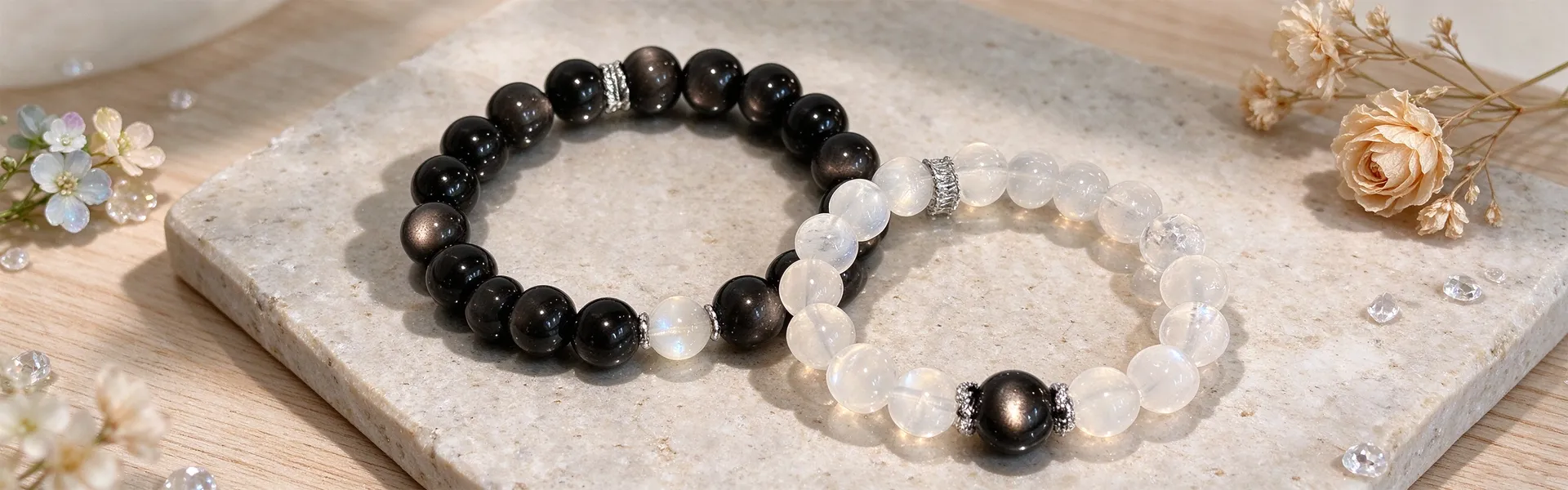
What Makes a Pair
I've been thinking about that answer since. Why do some things look better in pairs?
It's not about symmetry. The bracelets aren't identical. One is light, one is dark. One is mostly moonstone, one is mostly obsidian. They're opposites.
But opposites can balance each other. A bright room needs a dark corner. A loud conversation needs a pause. A person who talks a lot needs a friend who listens.
The two bracelets work the same way. Alone, each one is fine. Together, they say something more.
A Quiet Kind of Contrast
The stones themselves are already quiet. Moonstone has a soft sheen—pale, almost translucent, with a faint blue glow that shows up only when the light hits it at the right angle. Obsidian is darker, smoother, reflective in a different way. Not shiny. Just deep.
Neither stone is flashy. Neither one demands attention. But side by side, they create a contrast that's hard to stop looking at.
I think that's what my friend meant when she said they look better together. It's not that either bracelet is lacking. It's that they make each other more interesting.
Wearing Them Apart
She doesn't always wear them as a pair. Sometimes she wears just the light one. Sometimes just the dark.
I asked if that felt strange now that she's used to both.
"Not really," she said. "It's like wearing one earring instead of two. You notice it for a minute, and then you forget."
I like that. Objects that can be worn alone or together. That don't require a complete set. That work however you decide to use them.
A Gift for Two, or One
I've thought about buying a set for myself since then. Not because I need two bracelets. But because there's something appealing about owning a pair—one light, one dark—and deciding each morning which one to wear.
I've also thought about giving one to a friend. Keeping the dark one for myself. Letting the light one go.
That feels right too. A pair doesn't have to stay together. Sometimes the point is that it can be split.
FAQ
What are the two styles?
The Light is pale moonstone with a dark obsidian center. The Dark is obsidian with a moonstone center.
Are the stones natural?
Yes. Both moonstone and obsidian are natural, so each bracelet varies slightly.
Can I buy just one?
Yes. They're sold individually, but designed to be worn together.
How does it fit?
Elastic stretch. It slips on and off without a clasp.
How do I care for it?
Keep it dry. Avoid perfume and lotions. Wipe with a soft cloth.
Wear one. Wear both. Either way, it works.


